Workshops gave students the opportunity to move from observation to practice. Some were integrated into university courses, while others were offered as independent learning opportunities.
POTTERY WORKSHOP – Temporary Structures
Artisan: Abu Tareq Fakhouri and his family
Location: Birzeit University
Participants: 48 students
Courses integrated:
DSIN2340 – Material Properties 2
DSIN2460 – Product and Furniture Design
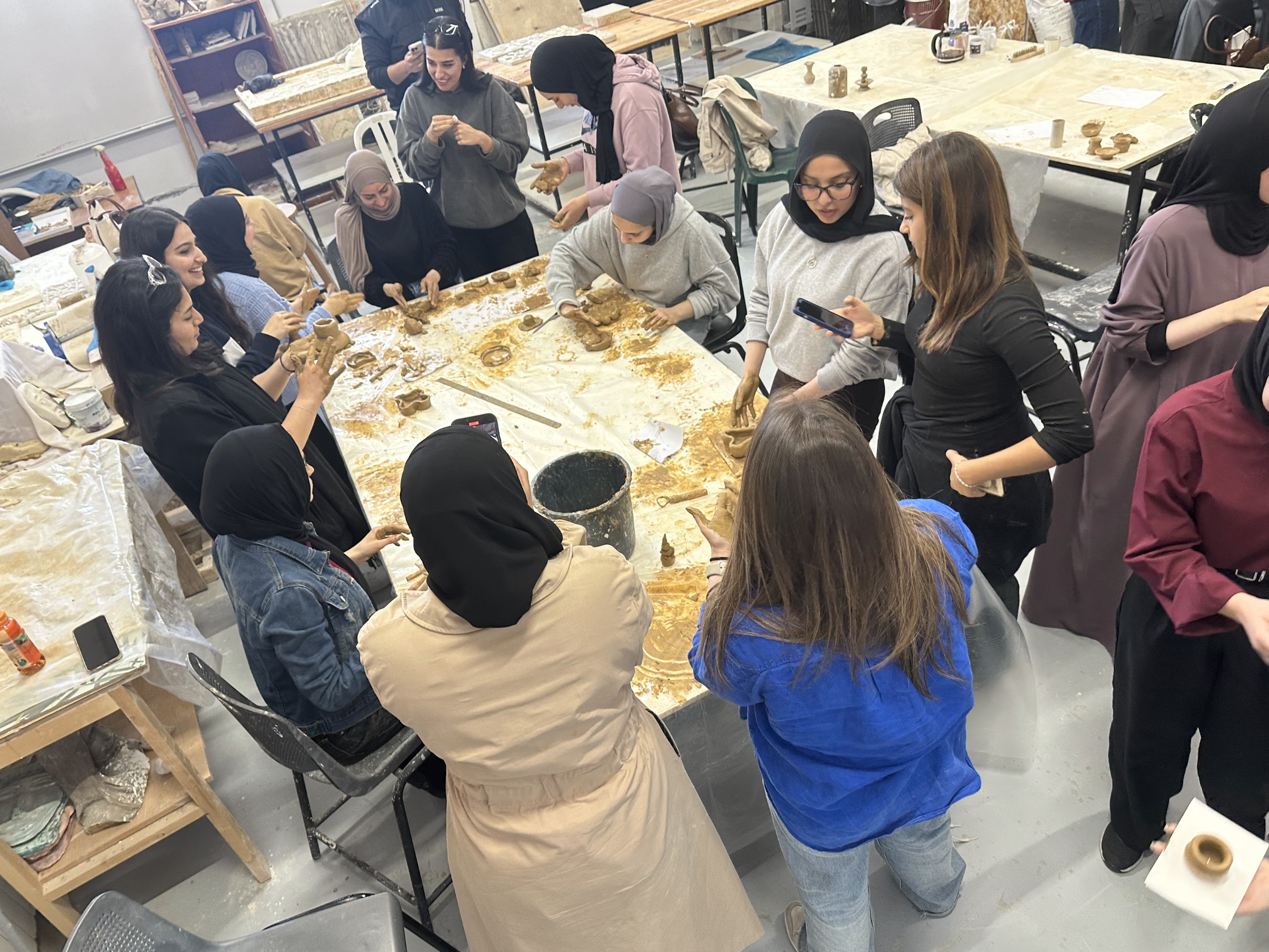
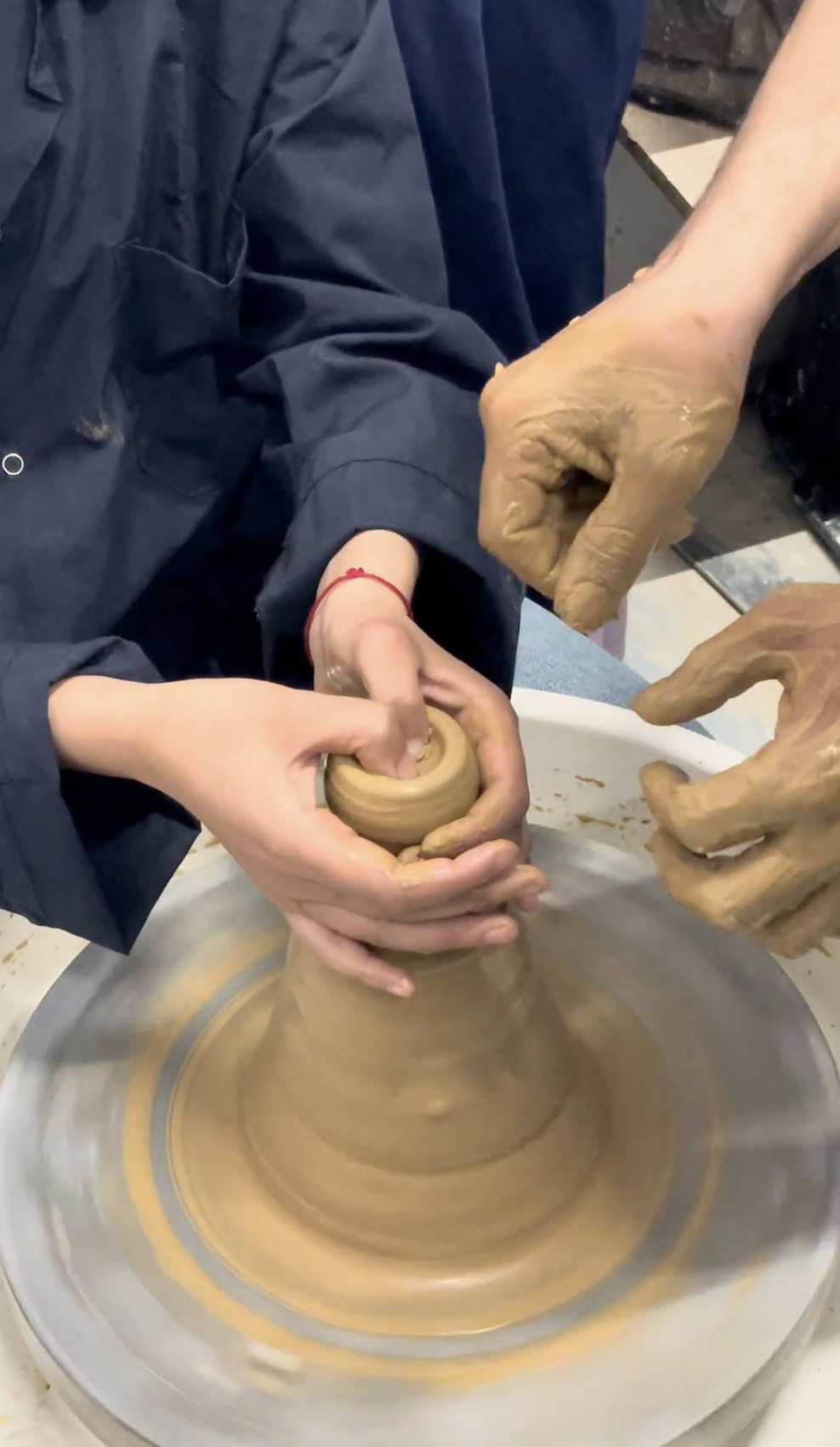
As part of the Temporary Structures course, all students participated in hands-on activities led by the Fakhouri artisans. Each student engaged in individual wheel-throwing to create a unique pottery piece, while working in small groups, they also explored free-form clay experiments using hand-building techniques to investigate the material’s expressive and structural potential.
Following the initial forming process, the pieces were naturally dried under sunlight before students applied surface treatments and motifs inspired by local visual traditions. The final works were then kiln-fired, completing a full cycle of craft engagement—from cultural research and material experimentation to making, reflection, and production.
LOOM WEAVING WORKSHOP
Artisan Collaboration: Talleh Center
Location: Talleh Center, Abu Dis
Participants: 32 students
DSIN3370 – Temporary Structures
DSIN2330 – Fashion and Textile Technologies
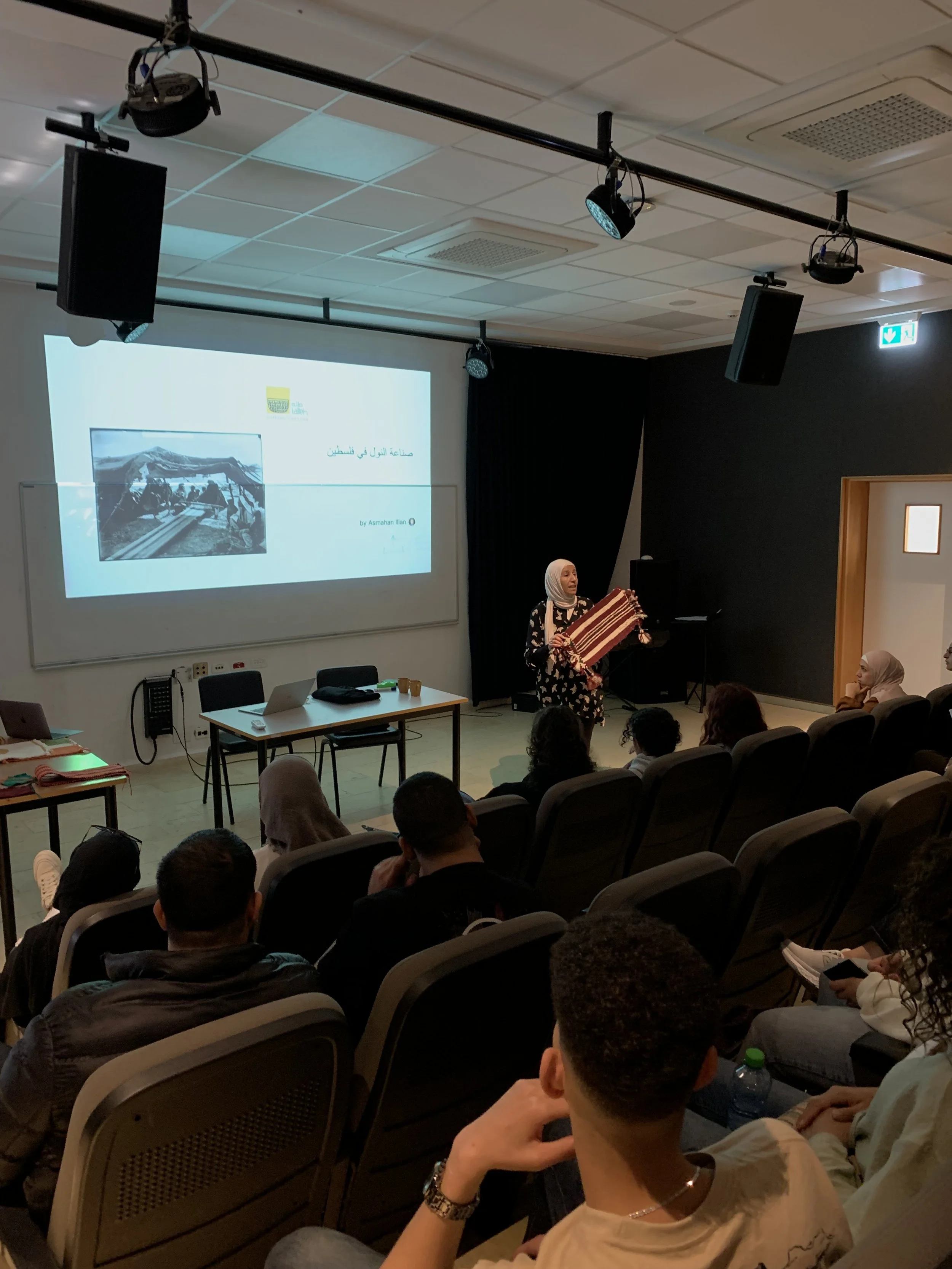
The workshop provided a comprehensive, hands-on introduction to the full weaving process, from wool carding, spinning, and natural dyeing to loom warping and weaving. Artisans constructed a basic frame loom modeled on the traditional Palestinian floor loom used for rug weaving and demonstrated a range of time-honoured techniques.
Through direct engagement with these processes, students developed both practical skills and a deeper understanding of the historical and cultural significance of Palestinian weaving traditions. They were subsequently encouraged to incorporate the techniques and knowledge gained into their final projects, developing prototypes across fashion, furniture, and product design that explored the relationship between heritage and innovation.
LOOM WEAVING WORKSHOP 2
Artisan: Al-Samou’ Charitable Association.
Location: Birzeit University
Participants: 48 students
The practical weaving workshop, conducted in collaboration with the As-Samou’ Association for Traditional Crafts, introduced students to both the collective and individual dimensions of Palestinian loom weaving (noll). The workshop combined hands-on learning of traditional techniques with opportunities for creative experimentation and contemporary interpretation.
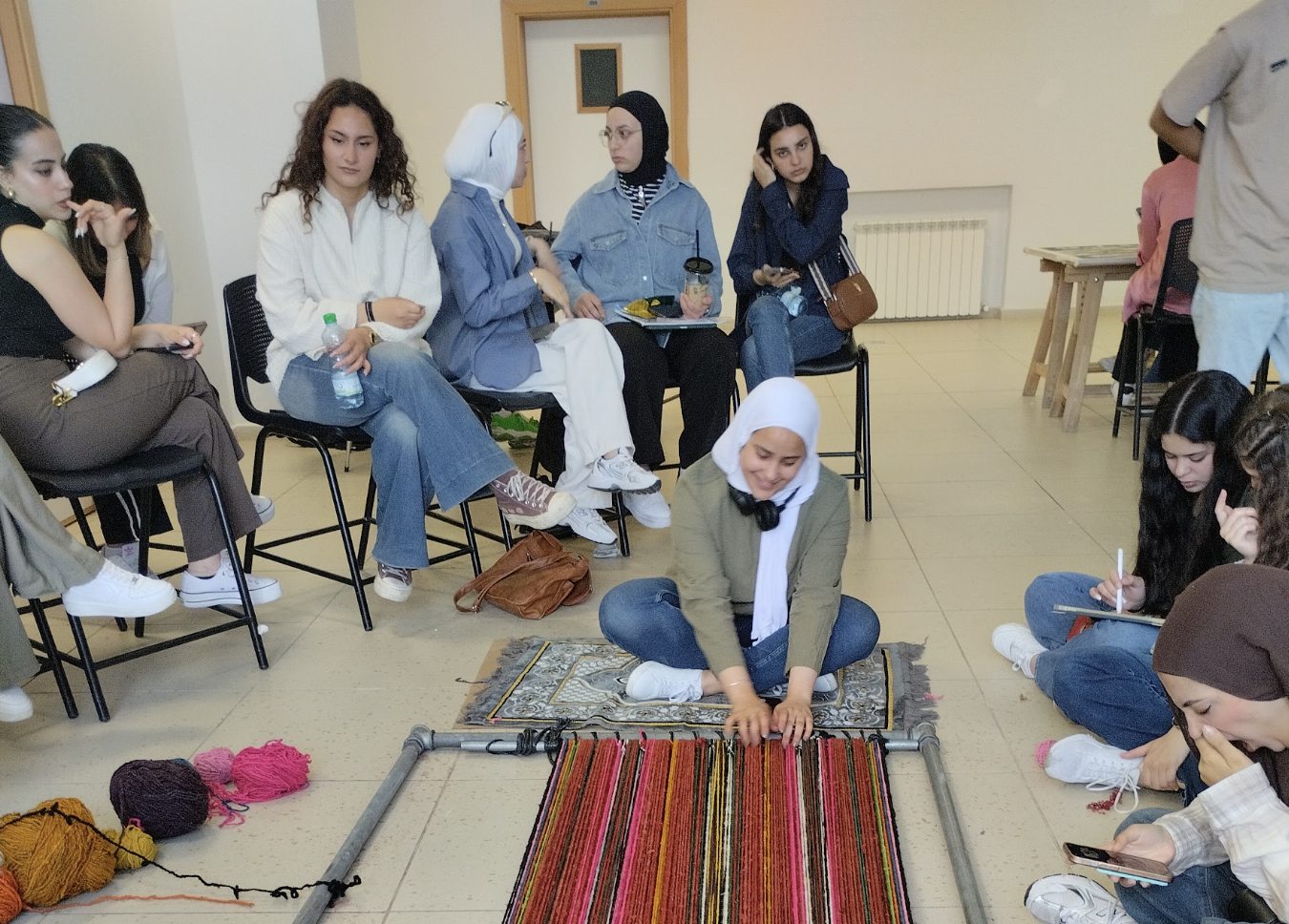
In the first part, students worked collectively with craftspeople from As-Samou’ to assemble and operate a full-scale ground noll loom and weave a traditional wool carpet. This experience gave students a practical understanding of the labour, rhythm, and collaborative nature of large-scale textile production, while highlighting the cultural and social significance of communal weaving practices in Palestine.
The second part focused on individual exploration. Working in small groups on scaled-down acrylic frame looms, designed to simulate the mechanics of the traditional noll, students experimented with different weaving patterns, colour schemes, and material combinations. They worked with wool, cotton, and alternative fibres, exploring both traditional motifs and contemporary interpretations.
Together, the two components provided a full-spectrum experience—from learning traditional techniques to reimagining their application within contemporary design. The workshop strengthened students’ practical skills and encouraged critical reflection on the continued relevance of Palestinian weaving heritage in spatial, product, and textile design.
MOTHER-OF-PEARL OPEN WORKSHOP
Artisan: Issa Kharoufeh
Location: Piccirillo Handicraft Center, Bethlehem
Participants: 10 students
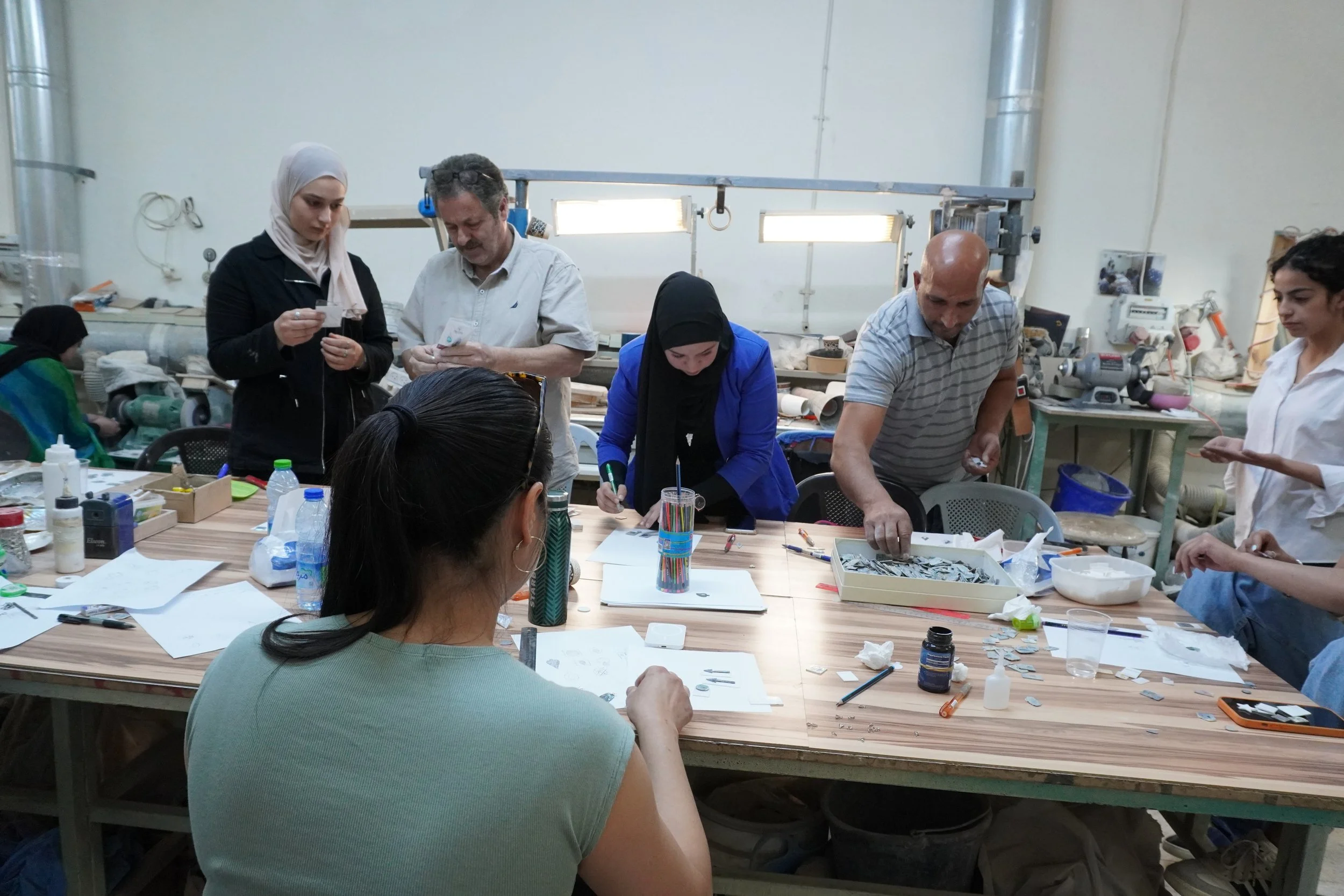
Students visited the Piccirillo Handicraft Center to learn about the traditional practice of mother-of-pearl craftsmanship and the center's role in preserving and transmitting the knowledge.
Working directly with a master artisan, students learned the process of creating mother-of-pearl jewellery, from initial sketches to cutting, smoothing, and finishing.
Each student produced two to three handmade jewellery pieces, gaining first-hand experience of the material and the precision required to work with it.
The visit also introduced students to the sourcing of materials and the potential use of mother-of-pearl in contemporary jewellery, interiors, and other products.
GLASS DESIGN WORKSHOP
Designer: Nawal Amer
Location: Birzeit University
Participants: 39 students
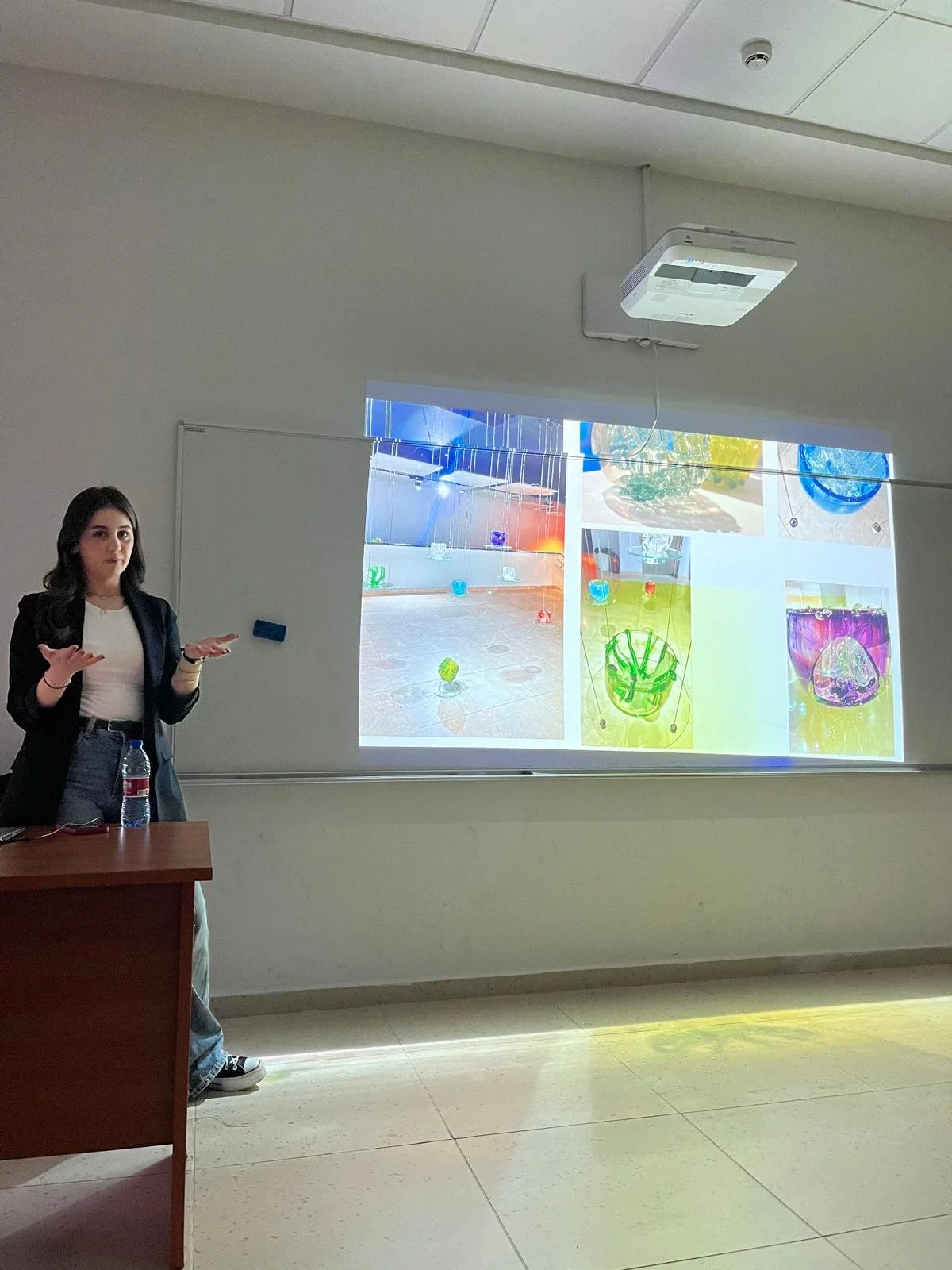
As part of the Product and Furniture Design course, Nawal delivered a comprehensive lecture on the use of glass in contemporary design, with a focus on local Palestinian practice, sustainability, and cultural heritage. She also led a hands-on workshop and participated in the studio’s midterm review, providing individual feedback and mentorship as students developed their concepts and explored the use of glass as a design material.
Her involvement helped bridge conceptual thinking and practical making, encouraging students to consider how traditional glass and ceramic practices can be reinterpreted through contemporary design. Students developed innovative products that moved beyond conventional applications of these materials, while gaining foundational experience in glassblowing and ceramic techniques and exploring their expressive and structural possibilities.
The process strengthened students’ appreciation of traditional craftsmanship and cultural heritage, while encouraging design outcomes that combined contemporary functionality with cultural symbolism. At the same time, students encountered practical challenges, particularly the substantial practice time required to gain confidence in glassblowing and the limited availability of diverse glass materials, which constrained some of their design possibilities.
POTTERY WORKSHOP
Artisan: Abu Tareq Fakhouri and the Fakhouri family
Locations: Birzeit University
Participants: 80 students
A full-day hands-on workshop introduced students to traditional pottery techniques and production processes. Students engaged directly with the material, exploring its potential in contemporary design and interior applications. The workshop emphasized tactile craft-based making, heritage, and material understanding.
The pottery workshop led by Abu Tareq Fakhouri was introduced as part of the material exploration phase. Students attended a full-day hands-on workshop that introduced traditional pottery techniques and production processes. The activity allowed students to directly engage with the medium and explore its potential in contemporary interior applications. The workshop aimed to connect design students with tactile, craft-based making, emphasizing heritage and material understanding.